
Founder of the Noosphere Energy Cluster: “Oblenergos are committing suicide, thereby fostering the development of a decentralized energy system in Ukraine”
Volodymyr Shvedkyi on domestic energy storage production, investment opportunities, and the government solutions that businesses need
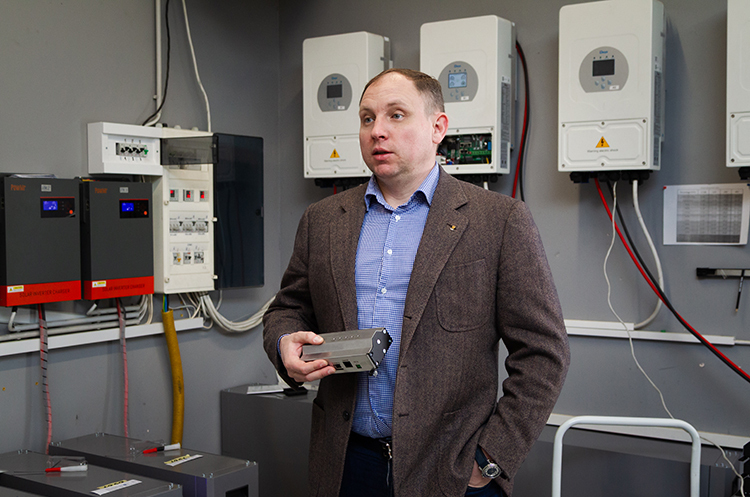
For ten years, Volodymyr Shvedkyi headed Energy Trade Group (ETG), leading it into the ranks of the Ukrainian energy market leaders. However, in August of last year, he decided to step down as CEO to focus on his own business.
Volodymyr Shvedkyi founded the Noosphere Energy Cluster – a group of companies that implements turnkey projects in the field of renewable energy. The technological core of the cluster is Resource Storage LLC, which manufactures and integrates innovative energy storage systems (ESS) for businesses under the Resource brand.
Mind sat down with Volodymyr Shvedkyi to discuss the direction of Ukraine's energy market during the war, the formation of the energy system's new architecture, the role of distributed generation, the most profitable investment areas, and the future of energy trading.
He also spoke candidly about the specific practices of oblenergos (regional power distribution companies) that continue to distort the market, and the government solutions businesses need to work as effectively as possible toward strengthening Ukraine's energy resilience.
On Energy Investment and Generating Profits
- Volodymyr, tell us about your own business. What does “Noosphere” do?
- We work with corporate investments based on the end-to-end principle. This means we execute every stage of an energy project: from the initial idea and investment to implementation, commissioning, and the commercial management of energy assets through trading operations.
Currently, our team is building an asset portfolio that includes wind and solar generation, energy storage systems (ESS), and BTM solutions for businesses – solutions that operate directly at the facility rather than within the centralized power grid.
- What are BTM solutions?
- BTM is an acronym for “Behind-the-Meter.” For a business, such solutions involve constructing solar power plants on rooftops or company grounds, energy storage systems, gas cogeneration units, energy management systems, and local microgrids. This is exactly what is needed for energy autonomy, uninterruptible power for production, and cost savings.
However, for us at Noosphere, this isn't just a collection of assets we build for clients. We integrate all elements – generation, storage, and management – into a single, controlled system. We don't just sell individual solutions; we take responsibility for generating profits. That is the core logic of the end-to-end approach.
The most crucial part of this business is the “last mile.” Our specialists provide energy asset management and electricity trading.

I am convinced that in the coming years, trading will become the most technologically advanced segment of Ukraine’s energy sector. The winners won't be those who simply produce electricity, but those who know how to manage an asset portfolio, work with data, react quickly to the market, and monetize flexibility. It is at this intersection – of generation, storage, digital platforms, and trading – that the new architecture of Ukrainian energy is being formed today.
On Decentralized Energy and New Opportunities for Consumers
- What is the current state of our energy sector in the fifth year of the full-scale war?
- The experience of last winter and the enemy's constant attacks on infrastructure have proven that Ukraine's existing centralized energy system is not equipped to meet wartime challenges. The old model, where high-voltage and distribution power lines transport massive volumes of energy over long distances, is losing its relevance.
We are seeing a shift in the geography of consumption. Some enterprises are relocating from the East and South, primarily to the Western region. Ukraine’s new industrial map requires a total rethinking of the entire grid structure. Reconstruction must be built on the principles of decentralization, focusing on the rapid expansion of renewable energy sources across the country.
This means that generation is moving closer to consumers. Against this backdrop, power lines are losing their central role. There is no longer an urgent necessity for them, especially for businesses.
- Why is this happening?
- Power lines transmit electricity from large generation sources to consumers. However, a significant portion of such facilities has been destroyed by our enemy, Russia. Therefore, since the start of the war, the construction of distributed generation – which has lower capacity but helps avoid power outages – has been rapidly gaining momentum in Ukraine.
Consequently, not only businesses but also households are increasingly switching to autonomous self-sufficiency, as the main power grids are no longer capable of providing them with a stable electricity supply.
Russian aggression has not only accelerated changes in the energy system but has also prompted a new philosophy of energy consumption. Energy efficiency, autonomy, and grid independence – this is the new ideology of energy supply in our country. This is evidenced by hundreds of megawatt-hours of energy storage systems imported into Ukraine and hundreds of megawatts of completed renewable generation projects.
Mind Reference
The primary trend in Ukraine's energy market, which has intensified since the start of the full-scale war in 2022, is the decentralization of the energy system, along with the active development of RES (renewable energy sources), small-scale gas generation, and ESS (energy storage systems). The transition to a decentralized model ensures a stable energy supply for consumers and supports both national security and economic growth. The market operates under a model that includes bilateral contracts, the day-ahead market, and the balancing market.
Integrated solutions that combine solar power plants (SPP) with energy storage systems (ESS) are becoming increasingly popular. With professional development, these projects provide affordable power for businesses and production capacities.
- Besides autonomy, what do such projects offer consumers?
- Independence from tariffs and their increases, along with significant cost-saving opportunities. The economics are firmly on the side of distributed generation. While prices for apartment residents remain relatively affordable, the situation is entirely different for businesses. Today, there isn't a single company paying less than 11-12 UAH per kWh.
Electricity from a diesel generator currently costs over 40 UAH per kWh. In February, the cost of electricity for business consumers reached 15 UAH per kWh. In contrast, energy from one's own SPP and ESS can cost as little as 7 UAH per kWh, with a project payback period of three to four years.
The specifics of the Ukrainian energy market allow for even greater savings. Just imagine: with your own ESS, you can store electricity at a price of 0.10 UAH per kWh (for example, during daytime hours in the spring-summer season) and consume it during peak hours when the price can soar to 15 UAH.

Such cases that bring profit to businesses are becoming increasingly common in Ukraine. According to our estimates, over 60% of large companies are currently actively implementing self-sufficiency projects based on renewable energy and ESS. The share for medium-sized businesses does not exceed 30%, and for small businesses, it is only 10%. However, it is obvious that these figures for smaller companies will grow.
- What is the basis for your confidence?
- Stable, autonomous power supply at an acceptable price provides significant incentives. Therefore, I have no doubt that the expansion of distributed generation in Ukraine is only a matter of time.
I do not believe in the state's ability to restore the lost centralized generation that served the needs of all consumers. Thus, when it comes to energy supply, everyone must take personal responsibility. Especially since effective solutions already exist on the market. The main thing is for the state not to interfere but, on the contrary, to create sufficiently favorable conditions. This is the only way our country can avoid an energy collapse.
On Government Policy, Tariffs, and Oblenergo Manipulations
- What favorable conditions from the state do you have in mind?
– The Ministry of Energy must define a strategy – the core vectors for the development of the Ukrainian energy system for at least the next 10 years. For business, such a document is of great value. It serves as a compass, showing where investments should be directed to ensure the energy resilience of the national economy and the state as a whole.
- What information from the state is of particular value to you?
- The government strategy should identify priority types of generation, taking into account the geographical features of Ukrainian regions and their industrial potential. This would facilitate the development of powerful distributed generation ranging from 25-100 MW. We are already prepared to implement such projects; we just need the state to set the key directions.
Currently, much of the generation in Ukraine has been built in an uncoordinated manner. We have hundreds of megawatts of wind and solar plants, as well as ESS, in development. This indicates that the foundation of Ukraine’s new decentralized energy system has already been laid. The strategy that needs to be approved at the government level is already on the surface. As they say, “There’s no need to reinvent the wheel.”

At the same time, I want to emphasize that the state should limit its intervention in the market and stay out of the way of business. We need less bureaucracy and more freedom to rebuild the generation we so desperately lack for the development of the Ukrainian economy as quickly as possible.
Furthermore, grid connection remains a major bottleneck – specifically its timelines and cost. This is a bad signal for investors.
To be fair, this problem is not unique to Ukraine; it is characteristic of other countries as well, including the US and the EU. Through tariffs, Distribution System Operators (DSOs) and Transmission System Operators (TSOs) are literally sitting on piles of cash, yet the market feels virtually no benefit from them.
In Ukraine, the war has introduced its own national peculiarities. In conditions of a significant deficit in the power system, every new megawatt of installed capacity is worth its weight in gold to the economy. Therefore, I believe that any fees paid to DSOs for grid connection should be abolished entirely.
- Could you explain in more detail why you believe this?
- Every new generation facility in the power system provides additional tariff revenue for the DSOs. Yet, for some reason, they lack sufficient motivation to connect them, as they constantly drag out the process.
Since 2022, the volume of electricity that DSOs deliver from large-scale generation to consumers has been steadily falling in Ukraine. The quality of their services is declining. DSOs are losing customers. This leads to increased network maintenance costs and, consequently, rising tariffs.
Over the four years of full-scale war, energy consumption in Ukraine has dropped by up to 50%. Meanwhile, distribution and transmission account for up to 30% of the electricity tariff. This is a significant share.
As a result, consumers have more and more incentive to abandon the services of monopolists – which the DSOs are – and switch to their own autonomous energy supply to significantly cut costs.
In general, the activities of DSOs in Ukraine must become more transparent. The opacity of DSO maintenance costs leads to unfair tariffs in all regions.
- During the war, there is a dominant demand for justice in Ukrainian society. Who can fix the tariff situation?
- The state regulator, NEURC (National Energy and Utilities Regulatory Commission), can fix it. It should establish a single benchmark distribution tariff for all regions of Ukraine. This would push oblenergos toward consolidation, cost reduction, and improved corporate governance. Only the most efficient players would be able to stay in the game.
Furthermore, there are still “sister companies” successfully operating in the Ukrainian energy market that can manipulate tariffs.
- What kind of companies are these?
- These are Universal Service Suppliers (USS) that operate in the same pool as the oblenergos. This is an archaic structure that not only distorts the market but also drains the state budget!
- What exactly is the problem?
- The problem is that there are commercial consumers in «Group B» whom the state has allowed to operate without Automated Meter Reading (AMR). They have opportunities to receive electricity from USS at a subsidized rate rather than the market price, without any real justification for it.
If USS collude with DSOs, they can manipulate supply volumes and subsidized tariffs. As a result, the state “throws away” 1.5-2 billion UAH annually to compensate USS for the difference between market and subsidized electricity prices.
Although regulations mandating DSOs to install AMR for all consumers without exception have been passed multiple times, the situation remains unchanged.
Mind Reference
AMR (Automated Meter Reading) is a technical complex that automatically collects, processes, transmits, and stores data on consumed or produced electricity between the consumer and the energy supply organization. It ensures accurate commercial accounting and allows for real-time monitoring of consumption/generation patterns, tracking peak loads, and identifying deviations from contract volumes. AMR helps avoid financial losses due to manual accounting errors or electricity theft.
- Why do you think that is?
- Because it’s difficult to steal anything that is digitally accounted for.
In reality, all categories of businesses and residential consumers in Ukraine could be equipped with AMR within two to three years. This would immediately solve several critical problems: optimizing grid load, forecasting consumption, supporting power system flexibility, and making electricity theft or price manipulation impossible. Another positive outcome would be a reduction in oblenergo service tariffs.
A significant component of this tariff – accounting for about 60% – is the DSO payroll. This could be significantly reduced by cutting bloated staff and reforming corporate governance.
It is paradoxical, but a fact: the inefficiency of DSOs is encouraging even more consumers to abandon their services and switch to autonomous self-sufficiency using their own generation.
In short, through their own inaction, oblenergos are committing suicide, and by doing so, they are fostering the development of a decentralized energy system in Ukraine.
On the Energy Storage Market and the Advantages of NATO Codification
- An integral part of a decentralized energy system is energy storage, the production of which jumpstarted your own business. How do you assess the potential of the ESS market in Ukraine?
- It depends on the segment. The first is small-capacity ESS (5-50 kWh), which are in demand among households and small businesses. We estimate the potential at 25.000-30.000 units annually.
The second segment consists of medium-capacity ESS, ranging from 200 KWh to 5 MWh. Owners of these systems can reduce their daily costs: charging the ESS when electricity is cheaper and consuming it during peak hours. Here, the potential is 1.500-2.000 storage units per year.
The third segment includes large-scale ESS (over 5 MWh), which are ideally integrated with solar and wind farms to increase their efficiency. According to our assessment, the Ukrainian market capacity for these is 100-150 units annually.
Our company is one of the largest ESS manufacturers in Ukraine, specializing in both small and medium-capacity systems. These are the so-called BTM (Behind-the-Meter) systems.

Assembly of a Resource Energy Storage System (one of the modifications)
- Why did you make that specific bet?
- It is a rational, pragmatic decision. A business is protected from blackouts or temporary outages by having a 24-hour power reserve via its own ESS. This guarantees stable access to energy that the centralized power system can no longer provide – and at relatively low prices, as I demonstrated in one of your previous questions.
Our team, which installs 12-15 ESS every day, sees constant proof that Ukrainian businesses strive for autonomous power rather than waiting for «mercy» from monopolists.
- Are you concerned about competition in this already fairly saturated niche?
- No. We are confident in our position. While hundreds of companies can import equipment and dozens can install it, only a few are capable of correctly integrating and maintaining it.
Our advantage lies in our proprietary technical solutions and software that manages the energy equipment and stores client data. I am proud that the specialists at “Resource Storage” managed to bypass Chinese cloud services, where data from thousands of Chinese-made inverters usually converges. Therefore, every client of ours can be sure that their energy consumption data remains within Ukraine.
- Does this mean you have managed to move out from under the influence of the “Chinese factor” regarding information security?
- Exactly. While others were just talking about ESS and distributed generation, my team didn't waste time. They succeeded in developing a solution called “SafeBox” for the secure transmission of our ESS users' data into the SCADA (Supervisory Control and Data Acquisition) system. Not a single signal enters a Chinese cloud service.

SafeBox by Resource Storage: securing ESS data transmission to SCADA, bypassing Chinese cloud services.
- I heard that in addition to civilian ESS, you also produce energy storage units for the military. And that these are also your team's proprietary development.
- That is true. In 2022, it became clear that the energy consumption of the Ukrainian military would grow critically. They need autonomous power devices to maintain the stable operation of communication systems, laptops, Starlinks, radar systems, mobile phones, and drones. Therefore, our own R&D center developed rechargeable batteries specifically for army needs, which are now known on the market under the «Strumko» brand.
In 2025, we provided the military with the first samples of our ESS for testing in real-world conditions. We received positive feedback. Furthermore, the military confirmed that Strumko meets all the tactical and technical specifications required by the army. This gave our team even more enthusiasm. Ultimately, the Strumko ESS was officially assigned a NATO Stock Number (NSN).

Strumko batteries, specifically designed for army requirements
- What advantages did you gain by passing the NATO codification procedure?
- It means that our team is capable of competing in international NATO tenders. The road to the international defense procurement market is now open to us.
NATO codification is like a “universal passport” for equipment, allowing any country to quickly understand what the device is, how to use it, and where to find a replacement. Therefore, NATO countries can purchase Strumko ESS for their own arsenals to be used in mobile and military power supply systems, integrating them with solar stations, generators, and field grids.
However, our primary efforts are always focused on developing and implementing solutions that strengthen our own nation, both on the battlefield and in the energy sector. The needs of the Ukrainian market are our absolute priority.
In response to the rapid expansion of RES and ESS, our specialists have developed Resource Cloud, our own energy asset aggregation system. It has already received EU certification, confirming its reliability.
- What is the purpose of such an innovation?
- It is a cloud-based system that combines generation, consumers, and ESS into a Virtual Power Plant (VPP).
The Resource Cloud aggregator simplifies the process of generating profit in energy markets for owners of individual assets. This is a case where synergy prevails. In addition to extra income, participants in our aggregator will be able to optimize their electricity costs by managing their load.

Volodymyr Shvedkyi with a Resource ESS (one of the modifications)
The aggregator will also work to ensure the stability and flexibility of Ukraine's entire energy grid. By integrating a large number of energy storage units, solar and wind power plants, and small-scale gas generation, we are forming a powerful union of energy sources capable of balancing the grid by providing relevant services to NPC Ukrenergo.
The aggregator is a worthy alternative to the massive and expensive maneuvering/reserve capacities that made up Ukraine’s centralized energy system before the war – a system inherited from Soviet times.
- What is the potential of the aggregation market in Ukraine?
- We estimate it at 600 MWh of small and commercial ESS, 1.000 MW of solar, 500 MW of wind, and 300 MW of gas cogeneration units. However, for this potential to be fully realized, Ukrainian legislators still need to make an effort and introduce a comprehensive model for the aggregation of distributed energy resources. Without this, the development of aggregation in Ukraine remains blocked, and investment in RES and grid flexibility continues to slow down.
Mind Reference
Volodymyr Shvedkyi is a Ukrainian top manager, entrepreneur, investor, public figure, and philanthropist.
He has extensive professional expertise in the development of renewable energy projects, energy storage systems, energy trading, and the implementation of customer services and digital solutions for energy companies.
He is a graduate of the Massachusetts Institute of Technology (MIT Sloan School of Management), completing the Executive Program in General Management (2026), and of the Harvard Kennedy School, where he completed the Emerging Leaders Program (2024).
In 2024, he earned a PhD in Economics, with a dissertation titled “Management of Strategic Development of Supplier Enterprises in the Energy Market of Ukraine” at Kharkiv National University of Radio Electronics.
He is a member of the National Olympic Committee of Ukraine and Vice President of the Curling Federation of Ukraine.
If you have read this article to the end, we hope that means it was useful for you.
We work to ensure that our journalistic and analytical work is of high quality, and we strive to perform it as competently as possible. This also requires financial independence. Support us for only UAH 196 per month.
Become a Mind subscriber for just USD 5 per month and support the development of independent business journalism!
You can unsubscribe at any time in your LIQPAY account or by sending us an email: [email protected]
