




Manual Mode, Excessive Control and Lack of Professionalism: What Creates Problems in Customs-Business Interaction?
What lies at the root of business dissatisfaction with the State Customs Service, and how can it be changed?

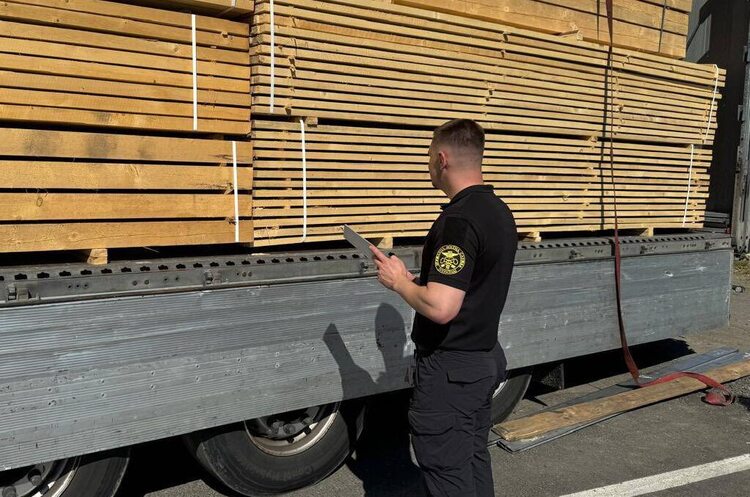
When speaking about the main difficulties businesses face when interacting with customs authorities, it is worth noting that many of the most painful problems in cross-border trade actually relate to areas that customs does not directly control. These include queues (or even blockages) at the western border, security factors, and the logistical challenges of wartime.
However, when it comes specifically to interaction between business and customs, paradoxically, the main issue is the excessive frequency and intensity of this contact itself.
Why do Ukrainian customs officers operate largely in a manual mode? Why do businesses depend on the personalised decision of an inspector? What role do management quality and the level of professionalism within the State Customs Service play? And how can the level of control and intervention be reduced to what is truly necessary? Oleksandra Bulana, PhD in Economics and analyst at the Ukrainian Centre for European Policy, addressed these questions in a commentary for Mind.
Why is interaction with customs so «painful» for business?
At present, in the overwhelming majority of cases, the processing of a customs declaration and the release of goods into free circulation requires a personalised decision by a customs inspector. In practice, this is a manual mode – despite the existence of an automated risk management system and a range of electronic services that the State Customs Service has been developing in recent years.
It is precisely this decision-making in «manual mode» that generates the human factor, leads to different interpretations of the same legal provisions across different customs offices, creates corruption risks, and slows down customs clearance.
Moreover, Ukraine’s public administration still operates under a fundamentally flawed paradigm – that «the customs officer is responsible for everything declared by the business». Shielding themselves with this approach, customs officers may delay clearance by demanding an excessive number of additional supporting documents from businesses.
How can the manual mode in customs clearance be avoided?
The problems described above can be addressed through further implementation of a risk-based approach (checking only what is suspicious) and continued automation of customs clearance – ultimately to the point where goods can be released into free circulation without any involvement of a human inspector.
The prerequisites for this were already embedded in the current Customs Code back in 2020, and recently the State Customs Service reported the first cases of import clearance in automatic mode. These initiatives can only be welcomed. However, for now, «automatisation» is available only to a narrow circle of selected businesses – Authorised Economic Operators (AEOs), of which there were just 117 across the country as of early March. For this mechanism to fully realise its potential, it is necessary to gradually, but as widely as possible, expand the circle of businesses eligible for automated clearance.
In the European Union, as early as 2019, 92% of imports and 82% of exports (under standard procedures, without taking into account AEOs and other simplifications) were cleared in less than one hour. In practice, this is what automated clearance looks like: if risk indicators are not triggered, a European customs officer does not even approach the declaration.
When Ukraine’s customs statistics approach these figures, it will mean that the majority of the problems troubling businesses – and slowing down customs clearance – have been resolved.
Unjustified adjustments of customs value and classification disputes
Systemic problems related to fiscal pressure from customs on businesses began as early as the mid-2000s. This primarily concerned control over the customs value of goods – again, through mechanical manual verification of declared values and the de facto use of WTO-prohibited minimum price benchmarks (so-called «reference tables»). Within this pressure, there were also cases of refusal to grant tax benefits and reclassification of goods into codes with higher duty rates.
According to the perception of many experts, the severity of this problem may have somewhat decreased recently (there were 12,500 customs value adjustment decisions in 2025 compared to 15,200 in 2024). However, it is still too early to speak about the justification of these adjustments and additional charges.
A large number of decisions on customs value adjustments are overturned in court precisely because customs authorities fail to properly substantiate their doubts and justify the legality of their actions.
As for disputes over classification of goods, methodological differences in classification approaches have always existed – and this is not only a Ukrainian issue. In some cases, the intensity of this problem could be reduced by applying unified internationally recognised approaches by both customs authorities and businesses.
For example, this could involve a single, user-friendly database containing classification decisions of the World Customs Organization, the European Union and EU Member States, as well as national classification decisions of Ukraine. Both declarants and customs officers could rely on such a database.
Customs post-audit has never been a strong fiscal instrument (only 0,4% of customs revenues came from additional charges resulting from post-audit). However, in my view, it should not be conducted solely for fiscal purposes.
The potential of the customs post-audit institution has not yet been fully realised. With proper governance, it could serve as a tool for facilitating international trade: maximum simplification at the release stage, and, where doubts arise, resolving them at the post-audit stage.
A new Customs Code based on EU rules: a panacea or a risk?
There is no and can be no alternative to Ukraine’s European integration. In order to join the EU, Ukraine must implement EU legislation into its national legal framework. It is precisely in this context that the preparation of a new Customs Code (published by the State Customs Service and the Ministry of Finance in the second half of 2025) is being considered.
At the same time, I would like to caution against perceiving this document as a panacea or a «magic solution» that will resolve all long-standing customs problems and bring European liberal approaches into domestic customs procedures.
The point is that EU customs law is not limited to the formal provisions of the Union Customs Code. It also includes a legal culture that has developed over decades and is based on a common-sense principle: control and intervene only where necessary. This culture is only partially formalised in various guidelines, manuals, compendiums, and case law – all of which cannot simply be «fit» into a new Customs Code.
Moreover, EU legal norms, unlike our legal tradition, are formulated far less rigidly, contain numerous expressions such as «where necessary», «in exceptional cases» or «within a reasonable time», and grant significantly more discretion to public authorities compared to current Ukrainian customs legislation.
Furthermore, the introduction of EU rules may have – and in some cases already has had – very different consequences for businesses. For example, in November 2023, under the guise of aligning with EU legislation, favourable procedures allowing clearance of goods without physical presentation to customs were abolished. This led to increased logistics costs and longer clearance times. At the same time, EU-style simplifications, including the AEO system, are still used by only a small share of Ukrainian businesses (AEOs account for 7% of exports and 5% of imports). For the rest, these changes have resulted only in deterioration.
Similarly, Ukraine’s experience of rewriting legislation to make norms as specific as possible and to limit administrative arbitrariness has been mixed. For instance, in 2012, when drafting the current Customs Code, the powers of customs authorities to adjust customs value were deliberately significantly restricted – yet in practice, customs officers simply failed to comply with the law (although court practice began to change after several years).
Therefore, «good European legislation» must necessarily be accompanied by «good governance». Without this, the system will not function as it does in the EU – and may even deteriorate. I am convinced that most problems in the customs sphere stem not from bad legislation, but from insufficient quality of governance.
Who faces the greatest problems and what do performance indicators have to do with it?
In a «country of common sense» customs authorities should:
- facilitate businesses that operate lawfully, identify and correct unintentional mistakes;
- as part of the law enforcement system, detect and stop criminal schemes in cross-border trade.
In Ukraine, unfortunately, there are cases where customs authorities create problems even for themselves. For example, as part of campaigns to «increase revenues at any cost» they adjust customs value without being able to justify their doubts, lose cases in court, refund overpayments – resulting in zero net effect, but significant losses of time, resources, effort, and nerves on both sides of this unproductive process.
In my view, this situation is largely driven by incorrectly defined objectives within the system. Traditionally, customs in Ukraine has been perceived exclusively as a fiscal authority whose efforts should be directed at maximising budget revenues by any means necessary. This is a fundamentally flawed concept that must be changed.
At the regulatory level, customs should be assigned realistic, fair, and measurable performance indicators that reflect the full range of functions of a modern European customs authority: protection of the market and society, combating crime, administration of taxes, and ensuring compliance with foreign trade legislation.
Incidentally, in this same context, we can also talk about what determines public trust in customs. In my opinion, it depends less on corruption (as is often portrayed in the public discourse), and more on insufficient institutional capacity, dependence on informal external influences, lack of professionalism, low morale, and similar factors. As these issues are addressed, customs authorities should begin to operate more effectively and transparently.
The OpenMind authors, as a rule, are invited experts and contributors who prepare the material on request of our editors. Yet, their point of view may not coincide with that of the Mind editorial team.
However, the team is responsible for the accuracy and relevance of the opinion expressed, specifically, for fact-checking the statements and initial verification of the author.
Mind also thoroughly selects the topics and columns that can be published in the OpenMind section and processes them in line with the editorial standards.
