




Less Bureaucracy or Fewer Environmental Safeguards: What the Law on Industrial Parks Changes?
The parliament has exempted industrial parks from environmental impact assessment. What risks does this pose, and what does European integration have to do with it

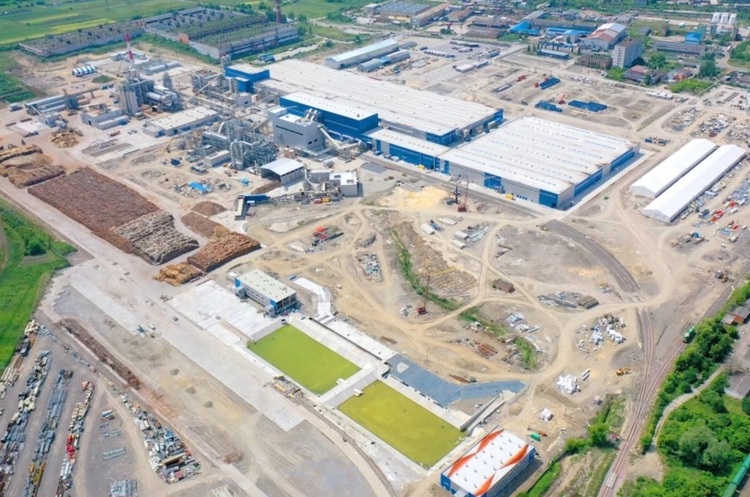
In early September, the Verkhovna Rada adopted Bill No.12117 on improving the functioning of industrial parks, which effectively abolishes the environmental impact assessment (EIA) procedure for their development. The law is currently awaiting the President's signature.
The amendments are presented as a way to simplify the establishment of industrial parks, reduce bureaucracy and attract more investment to Ukraine.
However, removing the EIA requirement means that the overall impact of a future industrial area on air, water, soil and human health may go unassessed beforehand. The relevant parliamentary committee has also explicitly pointed to the risks these changes pose to Ukraine's fulfilment of its European integration commitments.
Why did Parliament decide to remove an important environmental safeguard? What risks does this create for the environment and for investors, and is this approach compatible with Ukraine's path towards the EU? Yuriy Zadorozhnyi, public policy expert at the NGO «Ecoclub», examined these questions for Mind.
What Will Change for Industrial Parks
The law itself goes well beyond a single environmental provision. According to its authors, it introduces a range of changes intended to simplify the establishment and operation of industrial parks.
In particular, the law clarifies the powers of industrial park participants; simplifies the procedures for establishing, expanding and reducing the area of parks; regulates changes in the ownership of land plots; and expands the options for forming an industrial park's territory. It also introduces the concept of an eco-industrial park.
Some of the changes concern state support. Management companies whose principal activity is leasing real estate will become eligible to apply for state support, and opportunities to attract international technical assistance for industrial parks will be expanded.
Overall, the logic behind the changes is clear: the state wants to make industrial parks a more convenient platform for launching production and attracting investors.
The problem is that, alongside administrative barriers, the law also removes a safeguard that concerns environmental safety rather than bureaucracy.
What Changes in Environmental Impact Assessment
The current Law "On Environmental Impact Assessment" sets out the types of planned activity subject to the EIA procedure. These include the "development of industrial parks".
This means that before the territory and its associated infrastructure begin operating as an industrial site, the state must assess the project's potential environmental impact.
Law No. 12117 removes the "development of industrial parks" from this list. This is not about shortening the procedure or reducing the amount of documentation. The law eliminates altogether the legal basis for conducting an EIA of industrial park development as a project in its own right.
An EIA may still be required for individual enterprises within a park if their activities fall under the types listed in Article 3 of the Law on EIA.
This distinction is important. Assessments of individual enterprises cannot replace an assessment of the territory as a whole. An industrial park may bring together dozens of production facilities, warehouses, roads, energy facilities, and water supply and wastewater systems. Each may have its own impact, but for people living nearby, the park will be a single industrial area with a cumulative impact on air, water, soil, local transport and noise levels.
A comprehensive assessment at the planning stage is what makes it possible to identify such risks before the site is built up and put into operation. For industrial parks, Law No. 12117 effectively removes this possibility.
The law also fails to account for the fact that environmental problems which emerge only after production infrastructure is in place can be considerably more difficult and costly to address, including for investors themselves.
Lawmakers also appear to have overlooked that EIA is more than an assessment of potential environmental impacts. The procedure provides for public notification and public participation in the discussion of a project. People who may be affected by a future industrial area therefore have the opportunity to review information on potential risks and submit comments before the project is implemented.
If the "development of industrial parks" is removed from the list of activities subject to EIA, industrial park projects themselves will no longer be subject to public consultation under the EIA framework.
As a result, two important elements are lost at the planning stage: a comprehensive environmental impact assessment and the public participation mechanism that comes with it.
What Does This Have to Do with European Integration?
The issue is not confined to Ukrainian environmental legislation. Ukraine has committed to gradually aligning its environmental legislation with EU law, and environmental impact assessment is part of this process.
The European Commission's Ukraine 2025 Report, published as part of the 2025 Enlargement Package, explicitly states that efforts are needed to ensure the full application of EIA and strategic environmental assessment (SEA) to all relevant plans and projects, including reconstruction measures. The Commission also stresses the need to avoid blanket exemptions that exclude entire categories of projects from these procedures.
The EU Environmental Impact Assessment Directive also covers industrial estate development projects. These fall within a category for which EU Member States determine, through screening, whether a full EIA is required, taking into account factors such as the size of the project, its cumulative impact alongside other facilities, its use of natural resources, pollution and risks to human health.
In other words, the law as adopted is at odds with the EU EIA Directive and the European Commission's recommendations. It makes Ukraine's path towards the EU, where environmental protection and human safety are priorities, more difficult.
The development of industrial parks and the attraction of investment can indeed be important for Ukraine's economy and reconstruction. However, simplifying procedures need not mean abandoning environmental assessment. The legislator's task is to find a model that gives investors clear and predictable rules while preserving the state's ability to assess the cumulative impact of industrial development on the environment and people.
The OpenMind authors, as a rule, are invited experts and contributors who prepare the material on request of our editors. Yet, their point of view may not coincide with that of the Mind editorial team.
However, the team is responsible for the accuracy and relevance of the opinion expressed, specifically, for fact-checking the statements and initial verification of the author.
Mind also thoroughly selects the topics and columns that can be published in the OpenMind section and processes them in line with the editorial standards.
